
LAUSD enacts student AI moratorium: what parents need to know
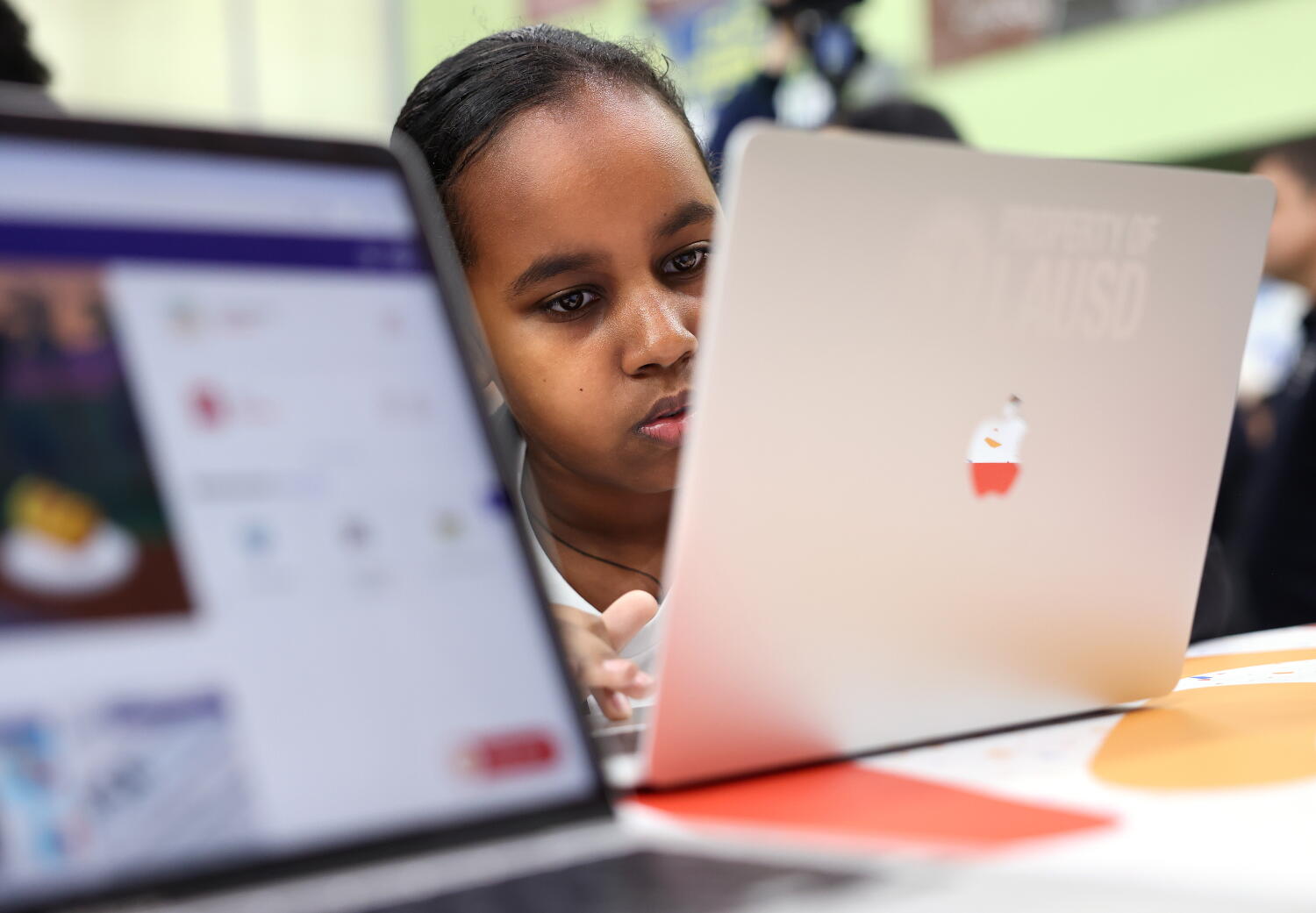
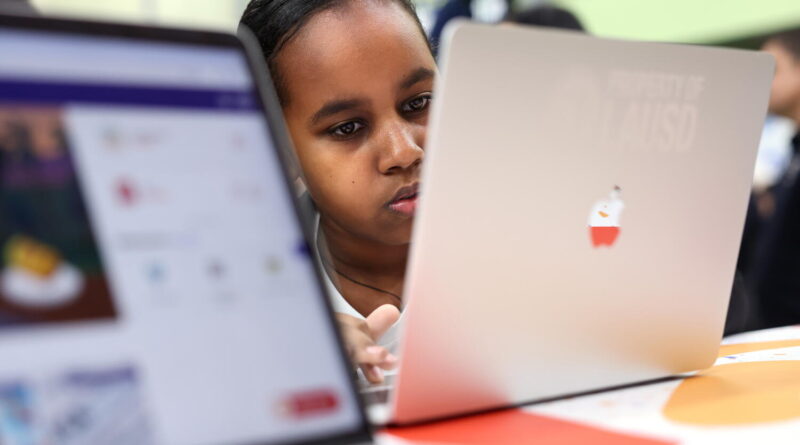
L.A. Unified has adopted a moratorium on student use of generative artificial intelligence for the current school year, officials said Wednesday, another in the school district’s pioneering decisions to limit computer use in classrooms amid rising parent concerns about the reliance on technology in schools.
The moratorium came to light at the first meeting of a school board committee examining issues around the use of AI in schools — a surprise to board members who were told by their chief academic officer and their head of technology that the new policy means that generative AI would be out of reach for all students on district devices until further notice.
Senior district administrators put the moratorium in place on their own authority in the spirit of complying with the school board’s unanimous June vote to limit student screen time. Under the screen-time policy, students have no access to screens until the second grade and permissible screen time is gradually expanded as students get older.
Board member Kelly Gonez said that, to her knowledge, the district was still following an earlier policy that made AI available to older students after they had completed instructional units on digital literacy and responsibility.
“I, even as a board member,” was “under the expectation that we were still operating under last year’s policy,” Gonez said. “The fact that it’s different today, this school year, is important.”
“Breaking news here in the committee,” Gonez said later, smiling.
Board member Nick Melvoin also expressed surprise, although like Gonez, he did not object to the de facto moratorium. He said it was important for the word to get out, while noting that the school board had not authorized this significant step.
“If the policy is we’re not going to allow students use generative AI for the meantime, then we should publicize that,” Melvoin said. “But also, that didn’t really come from the board, so I’m of two minds on that right now… just expressing some discomfort.”
The revelation came on a big day in related news: The New York City school system will ban student-facing generative AI tools, such as chatbots and tutors that respond to prompts, in preschool through eighth-grade classrooms, while allowing limited AI use in high schools.
Activist parents applaud policy
L.A. Unified’s current handling of AI could make it a leader in restricting its use. At least that was the view of activist parents who attended the meeting to call for an AI moratorium and then found it to be in place.
“This is unlike any public comment I’ve ever made,” said parent Bridie Lee, one of the leaders of the group Schools Beyond Screens L.A. “I’m not going to read my carefully crafted statement… I would like to make it crystal clear to everyone reporting on this today, that LAUSD has made history again. That apparently we have an AI moratorium, which we have been advocating for in all grades in LAUSD.”
She added: “Thank you to the team for listening to the evidence, the facts, and perhaps our work here is done.”
The New York school system, the nation’s largest, announced it will also limit screen time for younger students under its new policy.
Generative AI relies on underlying patterns from existing data to predict and produce new outputs, rather than just copying or sorting existing information. Generative AI can synthesize and extrapolate in valuable ways, but it also can produce wrong answers or take on tasks that educators would see as inappropriate or counterproductive — such as writing papers for students. There is even AI that will make such papers look student written by inserting a few errors or current slang terms.
For younger students, the Los Angeles screen-time ban took effect with the start of school. The new restrictions are being phased in for older students as the year progresses.
The AI moratorium applies to district-owned devices. There is not yet a district policy on what students can do on non-district devices, said Chief Academic Officer Pia Sadaqatmal.
However, if students accesses AI on their own device while logged into their school-district account, that activity can be tracked, said Douglas Le, interim chief information officer.
Teachers are not barred from using AI on district devices.
The Wednesday meeting was the first for a board committee looking at AI issues. Three of the seven board members are assigned to the committee. Also participating was board member Tanya Ortiz Franklin, who said she looked forward to helpful AI applications, such as one that would help parents access and understand information about the school district budget.