
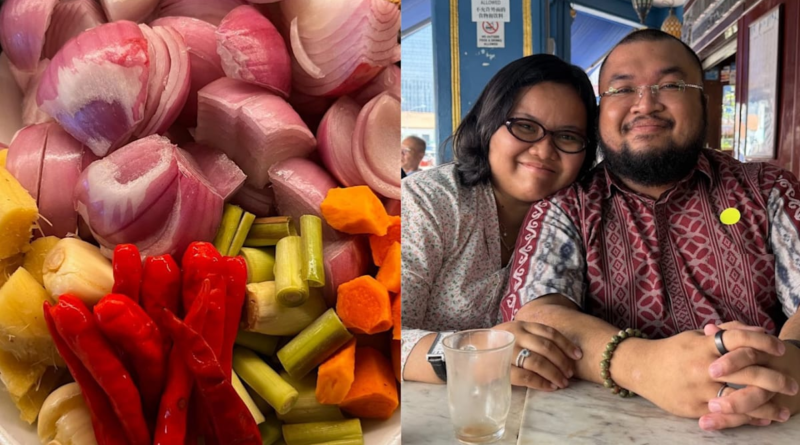
How one couple is making Singapore food heritage part of everyday life
But making food heritage more accessible is not only about getting people interested in it. For the couple, it also means making sure people can actually participate, regardless of how much time, money or prior knowledge they have.
They often keep their programmes free or charge minimal fees for those who may not have the means to attend, and work with organisations and individuals whose interests intersect with their own, including Sayur Story, a food programme by and for domestic migrant workers in Singapore.
Across these formats, they also try to move away from treating heritage as something that exists only in the past, or something that has to be replicated perfectly and rigidly from scratch.
“I know some people think we run programmes that make treats like kueh bangkit or kueh lapis from scratch, which takes hours,” Anugerah said. “But while those programmes can be fun to learn, we want to stick with what we see every day. We want people to have the freedom to encounter heritage through their own experiences and how they live today.”
This includes making multiple visits and tours around local pasars in Geylang, Chong Pang, Bukit Gombak and Tekka Market, treating these places not as relics of a romanticised, bygone Singapore but as living parts of the city where people still shop for ingredients, eat all kinds of dishes and gather with friends and family.
“These markets aren’t places of the past; they shouldn’t be overly romanticised because they exist now and many people – regardless of generations – still see value in them,” Aqid said. “So we often involve visits to these spaces as part of our programmes, for both the seasoned and those who want to start making visits to pasars a regular thing.”
Their workshops similarly focus less on teaching people a “correct” way of making a dish, and more on giving them the context and confidence to engage with it themselves.
“For our nasi ulam or sambal workshop, we don’t really teach people how to make the nasi ulam or sambal,” Aqid said. “We bring the ingredients together, but one table’s product can be entirely different from another group’s because each participant’s experience and stories can be distinct from the other.”
Running workshops grounded in dishes such as nasi ulam also feels like a particularly fitting example of how food heritage can be made more accessible, precisely because of the amount of labour traditionally involved in preparing it.
“We often tell audiences that if someone makes nasi ulam for you, they must really, really love you,” Aqid said. “Why else go through all that trouble of preparing so many ulams and slicing them so finely?”
And rather than romanticising that labour, the workshop will also cover what it can take to make the process easier and more accessible for people with little time and resources on their hands.