
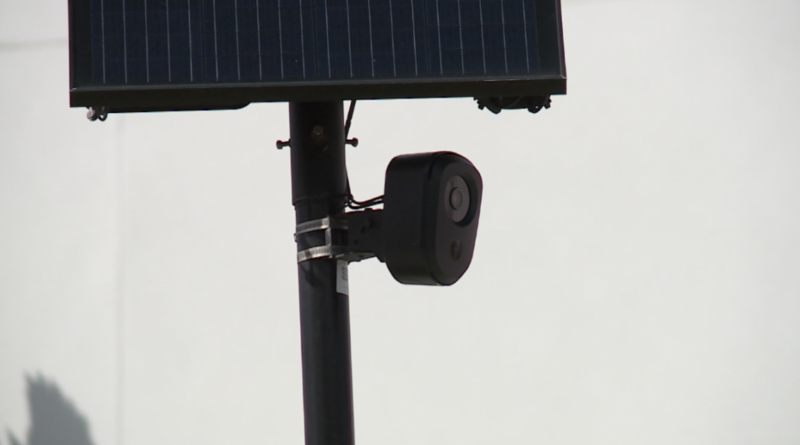
Fla. puts license plate cameras on the clock, calls grow for broader limits
TALLAHASSEE, Fla. — Florida’s license plate cameras are collecting something besides tag numbers: bipartisan pushback.
Gov. Ron DeSantis is ordering permitted readers off state highways as Republicans and Democrats call for broader restrictions on technology that police credit with solving crimes and critics warn can track everyday life.
WATCH BELOW: Florida puts license plate cameras on the clock amid calls for limits
Florida puts license plate cameras on the clock amid calls for broader limits
The Florida Department of Transportation’s Aug. 31 directive revokes approvals issued to local law enforcement agencies for automated license plate readers within state highway rights-of-way. Agencies have 30 days to remove the devices. After that, FDOT says it will remove any covered cameras that remain.
The department is also stopping new approvals, citing the rapid growth of the camera networks, reports of misuse and concerns about data privacy.
The order covers license plate readers from different manufacturers, including Flock Safety. Its reach is limited, however: Cameras on local roads and private property outside FDOT’s jurisdiction are not automatically covered.
Automated readers photograph passing vehicles and capture information police can search to locate suspects, stolen cars or missing people. The privacy concern is that the cameras also collect information about motorists who are not suspected of a crime.
Florida officers have faced accusations of using those databases to track spouses or former partners, national outlets reported.
DeSantis offered a more familiar example Monday: a trip to Buc-ee’s.
“It’s really none of the government’s damn business if you’re doing that, right?” he said.
The governor has acknowledged the cameras’ usefulness to police while questioning who controls the information and what safeguards prevent abuse. He pointed to New Hampshire as a possible model for restrictions on roadside readers while preserving their use in police vehicles. New Hampshire’s law defines a license plate reader as a device mounted to a vehicle and attended and operated by a law enforcement officer.
Some law enforcement leaders are defending the technology even as they comply with the state’s directive.
Miami-Dade Sheriff Rosie Cordero-Stutz said the county’s readers help solve serious crimes but would be taken down following the governor’s order, according to Miami Herald reporter Doug Hanks.
Flock told Fox Business it supports stronger safeguards while preserving technology it says helps police solve crimes and find missing people.
The push for restrictions also extends to the race to succeed DeSantis.
Republican nominee Byron Donalds has backed the camera removals and additional reforms. In an interview on Fox Business, he supported the governor’s move, according to Florida Politics.
Democratic nominee David Jolly has called for a warrant requirement, while saying any new rules must preserve law enforcement’s ability to respond to crimes in progress.
“I would like to see us move to an environment that fully requires a warrant,” Jolly said at a news conference last week.
Jolly renewed his call for a special session Monday, urging lawmakers to address the issue sooner.
Democratic state Rep. Anna Eskamani of Orlando is also pressing for action beyond state highways.
In a statement Monday, she supported FDOT’s decision but said it leaves cameras operating on city streets, county roads and private properties, including neighborhood entrances and shopping centers.
Eskamani urged Central Florida governments to pause new contracts and publish an accounting of existing systems, including how many cameras are deployed, who can search their records, how long information is kept and whether it is shared with agencies outside Florida.
“Public safety and privacy are not opposing teams,” she said.
Whether lawmakers act before November’s election remains uncertain. DeSantis said Monday he was unsure legislative leaders could reach an agreement that quickly, while leaving open the possibility of action after the election and before he leaves office in January. His full remarks are here.
For now, the cameras covered by FDOT’s order have a deadline. Lawmakers still have a decision.