
Scientists need help finding Colorado bats as white-nose syndrome spreads
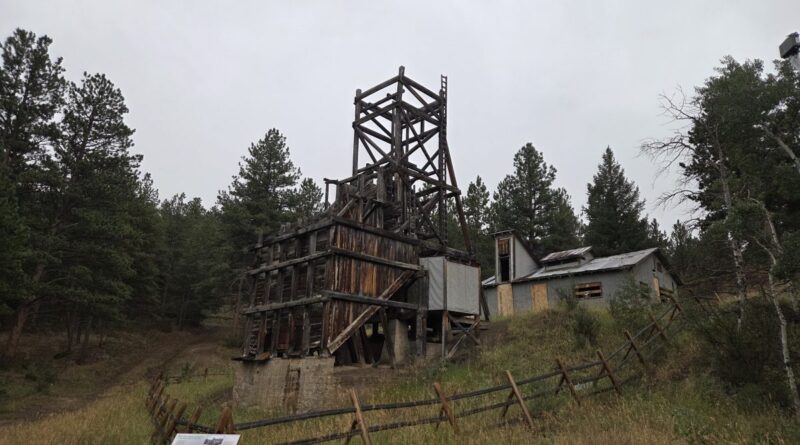
BOULDER COUNTY — The sun was disappearing when 10 volunteers took their places outside an old fluorite mine, headlamps strapped to their heads and clipboards ready. Then, they waited for the bats.
The volunteers were participating in Colorado Bat Watch, a community science program that asks volunteers to count bats as they emerge from mines and other roost sites. The data is helping scientists track Colorado’s bat population across a massive range of landscapes from the Eastern Plains to high alpine forests, and from rural towns to downtown Denver.
The data is vital to protect the roughly 20 species living in Colorado, especially as white-nose syndrome, a fast-moving disease that has killed millions of bats across North America, spreads.
“For the most part, we don’t really know where they are in Colorado,” Megan Mueller, a conservation biologist with the nonprofit Rocky Mountain Wild, said of the bat habitats.
“It’s kind of looking for a needle in a haystack because it’s a big state, they can roost in all types of places — in trees, under bridges, in buildings, in piles of broken rock like talus, so they can be in a lot of different places, and then also they move around seasonally.”

Biologists believe the Blue Jay Mine in Boulder County, where volunteers gathered on a recent summer night, is a maternity roost, or where female bats give birth and raise their pups. These sites offer a rare window into the animals’ lives and are critical to understanding how bat populations are faring.
The pups are still clumsy fliers, Mueller said, making quick forays out of the roost before fluttering back inside. Their mothers make more frequent trips, flying out to feed on insects before returning to nurse their young. At a bachelor roost, by contrast, the bats might settle into a large group for the night and emerge and return together.
“They need these places that are just the right temperature, that have insects, that are safe from predators,” Mueller said. “They come back to the same maternity roost sites each year, so if you lose those, it can really hurt the local population, especially if it’s a site that’s supporting a lot of bats.”
But scientists don’t always know how many bats are using these sites or how those numbers change over time. Colorado Bat Watch aims to fill that gap by establishing a baseline for localized bat populations that can help conservation biologists protect bats as white-nose syndrome takes hold.
Since 2023 when Colorado Bat Watch launched, about 100 volunteers have observed and documented bats while on trips to bat habitats in Boulder County. The spots to volunteer fill up in minutes with people coming as far as Kansas to join in an observation, said Paige Singer, a biologist with Rocky Mountain Wild, who led the volunteers. She hopes the program can grow to include more sites for volunteers to monitor.
“It gives me a new faith in humanity just to see the interest,” Singer said. “The interest and the love of bats has been uplifting in our current world.”
The program has also received 137 reports from the public about bat roosts across the state. People can do bat surveys on their own, recording bat sightings the hour after sunset or the hour before sunrise, when the nocturnal animals are more active, in backyards, local parks or open spaces.
“I do think that there can be some fear around bats, but if you go out to the roost site and just watch them emerge, it’s just neat to see,” Mueller said. “They’re doing their thing. They have zero interest in flying into your hair or bothering you really in any way. They just kind of want to go out there and eat insects and nurse their pups.”
At the Boulder County mine, volunteers counted just five bats before ending the survey at 8:40 p.m. By sunset, the occasional flutter of wings against the darkening sky had become harder to see.
High-country bats
Wildlife biologists with Colorado Parks and Wildlife are now searching for bats in places scientists once barely thought to look: high on mountain slopes, tucked into rock piles, known as talus.
The clue came, in part, from volunteers with the Colorado Pika Project, another citizen science program that sends people into the mountains to look for pikas and signs of their habitat. While searching for haystacks and pika scat in the rocks, volunteers began finding bats.
During trips above treeline, CPW biologists confirmed the volunteers’ reports. Now, the agency wants to find out how many bats use the rocky slopes in summer and whether they are carrying the fungus that causes white-nose syndrome, which scientists believe thrives in cooler temperatures.
“We were just out randomly searching on talus slopes with bright lights and we were finding them,” said Dan Neubaum, species conservation program manager for Colorado Parks and Wildlife. “We think it’s doable, but yes, it’s going to be a tough project that will be challenging and our sample sizes will probably be modest.”
The discovery surprised even Neubaum, who has spent his career studying bats and has hiked some of Colorado’s highest peaks.
“I’ve spent my whole career working with bats and I’ve hiked lots of high peaks, and you know, I’ve trundled over numerous talus slopes and never even thought about bats,” he said.
The search could help fill in a missing piece of the picture of how the disease is spreading across Colorado, Neubaum said.
White-nose syndrome was first detected in Colorado in 2023, when wildlife officials confirmed the disease in a live bat at Bent’s Old Fort National Historic Site near La Junta. Since then, seven bat species have tested positive across 10 counties, according to the latest data from Colorado Parks and Wildlife.

The disease causes a white fungus on infected bats’ muzzles and wings. The fungus doesn’t infect humans or pets, and bats are the primary way the fungus spreads. But the fungus can be transported on boots, clothing and other equipment, so people who visit caves should decontaminate their gear to prevent spreading it.
Most of the positive tests have been along the Front Range and Eastern Plains. But the disease has recently been detected in Grand County, another sign that it is moving across the state, Neubaum said.
The spread has been slower and more staggered than what scientists saw on the East Coast. One possible reason is that Colorado’s bats tend to roost in smaller groups, particularly in winter, when they gather to hibernate.
As white-nose syndrome spreads into more remote parts of Colorado, public reports could become increasingly important to finding the disease.
“We only have so many biologists that can spend so many evenings in different locations doing this work and when the public can do something like these emergence counts as a citizen science effort, it’s super cool and it’s definitely helpful for us to have that,” Neubaum said.
“There’s a lot of people on the Front Range to find a dead bat on a bike path, say, but there’s a lot fewer people out in the middle of a vast chunk of national forest and so it’s going to be tough to make those discoveries in these more remote locations,” he said.
The public can also help by reporting sick or dead bats to CPW, whose wildlife officers can collect the animals and test them for the disease. This summer, CPW has received an increase in calls from people reporting bats lying on their patios and decks, sometimes three or four at a time. Many callers worry the bats are sick or have rabies, but often, they are young bats that have fallen from overheated roosts while still learning to fly, Neubam said.
Drought could also be impacting the mammals, robbing them of needed water sources that also sustain the insects they feed on, Neubaum said. Bats are vital to ecosystems by controlling mosquito populations and agricultural pests.
“It’s been a rough summer for a lot of bats, temperature wise,” Neubaum said.
“A love for the underdog”
More data is needed before biologists in Boulder County can see exactly how white-nose syndrome is impacting the county’s bat population, said Susan Spaulding, an environmental resources senior specialist with Boulder County Parks and Open Space.
Counts from Colorado Bat Watch paired with acoustic recordings of bat calls around the county are key, she said.
During her first time observing bats for Colorado Bat Watch in early August, volunteer Stacey Showalter said she saw four bats come out of the part of the mine she was assigned to observe — less than she was expecting.
Still, it was an opportunity to help a species that she feels is often misunderstood.
“They are just not liked by a lot of people. … They are so beneficial to our planet,” said Showalter, a longtime bat lover who lives in Broomfield.
“Maybe I have a love for the underdog.”