
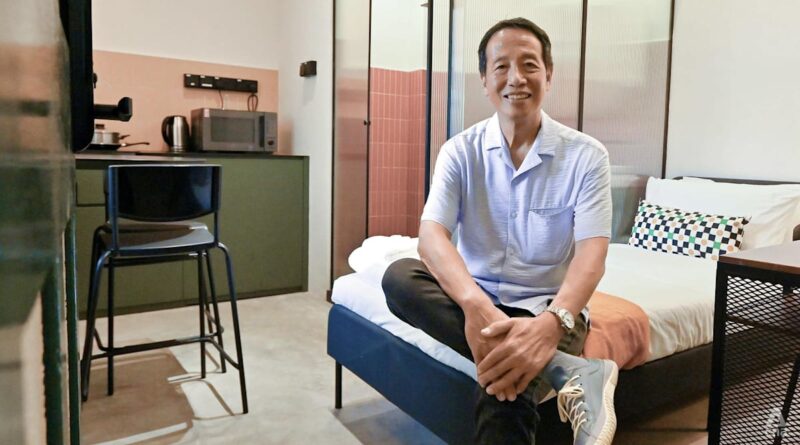
A rung on the housing ladder: Co-living fills gap for young adults, but home ownership remains end goal
FILLING THE MISSING MIDDLE
While home ownership remains the final end goal, co-living could fill a gap on the traditional housing journey of Singaporean youths, said observers.
“For a long time, the typical housing journey in Singapore has been quite straightforward: you live with your parents, get married, buy an HDB flat and eventually perhaps upgrade,” said National University of Singapore economics and real estate professor Sumit Agarwal.
While that model has worked well, Prof Agarwal noted that young people’s lives are becoming more varied.
“They are marrying later, changing jobs more often, spending time overseas, and some simply want to experience living independently before getting married,” he said.
Including co-living in the SG Youth Plan is an acknowledgement that there can be another stage in the housing journey, he added.
“I would probably call it an additional rung on the housing ladder rather than an alternative to home ownership,” he said.
Dr Tan Ern Ser, an adjunct principal research fellow at the Institute of Policy Studies (IPS), said that co-living could be a “third pathway” on the housing journey, but only as an interim arrangement until individuals become eligible for public housing.
“I see co-living as expanding the housing options of young adults until a time they marry or hit 35,” he said.
“After all, for instance, some students do enjoy dorm living. And this option may allow them to relive dorm living, which is not expected to be a long-term housing option. My sense is that some young adults may actually enjoy having a longer adolescence.”
Dr Tan said that beyond addressing the desire of youths to live independently, it also promotes a sense of community.
“Co-living may also facilitate social interaction, making friends, which could address the issue of some young people not having friends or perhaps even find a potential marriage partner,” he said.
Co-living facility operators said that tenants are drawn to their model due to the amenities, sense of community and also the duration of stay.
Mr Kelvin Lim, executive chairman and chief executive officer of Coliwoo, told CNA that his clients range mostly from 21 to 35, with tenants as young as 18 who are foreign students.
They typically stay for between six and nine months, and Coliwoo does not offer contracts of more than a year at a single stretch, he said.
“You don’t need to sign a very long lease, as opposed to a traditional rental, where you need to sign a one or two-year lease,” said Mr Lim, adding that the stay can be as short as one month.
Under rental rules, tenancies for HDB flats must be at least six months, and a minimum of three months for private residential properties.
Eco Energy general manager David Tan, whose firm runs the 1925 Quarters in Hindoo Road, said his facility draws mostly people in their 30s.