
Lawsuit blames Colorado electric company for starting Aspen Acres fire
A new lawsuit alleges that power lines owned by a southern Colorado electric company helped ignite and spread the Aspen Acres fire, which now ranks as the seventh-largest wildfire in state history.
Property owners Frank Elmer, Rafael Velez and Stacey and Seth Johnson, who are married, filed the lawsuit Wednesday against San Isabel Electric Association, alleging the utility was negligent and that a downed power line was a “substantial factor” in causing the fire, according to court documents.
Officials have determined the fire, which began June 29, was human-caused, but they have not yet shared what they believe sparked it or released details of their investigation.
Several witnesses reported seeing the origin of the fire, including one who recorded a fire burning south of the Aspen Acres Campground at about 6 a.m. Another witness reported a fallen tree on a power line and the sound of an explosion.
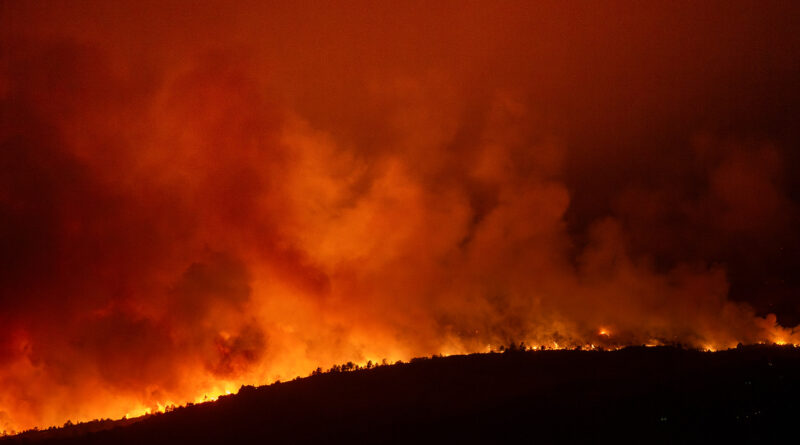
Strong winds with gusts up to 100 mph fueled the fire, which has scorched nearly 100,000 acres, and forced thousands of people to evacuate in Pueblo, Custer, Huerfano and Fremont counties. Officials have said at least 236 homes and nine commercial structures were lost in Pueblo County and 65 homes in Custer County.
Dozens of people were injured while trying to evacuate, the lawsuit alleges, though officials have not confirmed any injuries. Although the complaint says one person died while fleeing the fire, an attorney contacted by The Sun said the claim was made in error.
Investigators with the Colorado Division of Fire Prevention and Control are leading the probe into what started the fire, the most destructive since the Marshall fire in 2021. A spokesperson for the division declined to release any details on the investigation to “protect the integrity of the process.”
A spokesperson for the San Isabel Electric Association, which provides service for 20,000 members in southern Colorado, said the company is aware of the complaint, but declined to respond to specific allegations.
“In coordination with fire crews, we are working diligently to restore electricity to our members without service due to the fire,” spokesperson Paris Daugherty said in an email. “Our focus is on safely and efficiently performing necessary repairs to our system and restoring service to those members.”
The lawsuit claims strong winds carried flames from a powerline that started a ground fire in the Aspen Acres neighborhood and that San Isabel Electric Association “had a duty to mitigate wildfire risk by adequately clearing the … trees and organic matter that can cause or facilitate wildfires.”
Days before the fire, residents in the Aspen Acres area saw power line-related fires, which they fought and were able to extinguish, the lawsuit stated. The electric company “had or should have” noticed dangerous conditions in the vicinity of the powerlines, according to the lawsuit.
The lawsuit alleges that the company’s design of its electrical system, which transports electricity from its power plant to substations through high-voltage transmission lines, caused arcing that sparked the Aspen Acres fire.
The plaintiffs, who are residents of Pueblo and Custer counties, are among those “terrorized” by the fire and suffered property damage, injuries and economic losses from the fire, the lawsuit stated.
The lawsuit accuses the electric company of “putting profits over public safety.”
The allegations over the Aspen Acres fire’s origin come after nearly 4,000 people have reached settlement agreements with Xcel Energy over the utility’s alleged role in causing the 2021 Marshall fire. Xcel has repeatedly denied responsibility for the blaze, which destroyed more than 1,000 homes and businesses and killed two people.
Investigators with the Boulder County Sheriff’s Office determined that the fire had two ignition points: a fire to burn scrap wood on a residential property and a spark from an “unmoored” Xcel Energy power line. The two fires merged at some point and raced across 6,000 acres in Superior, Louisville and unincorporated parts of Boulder County.